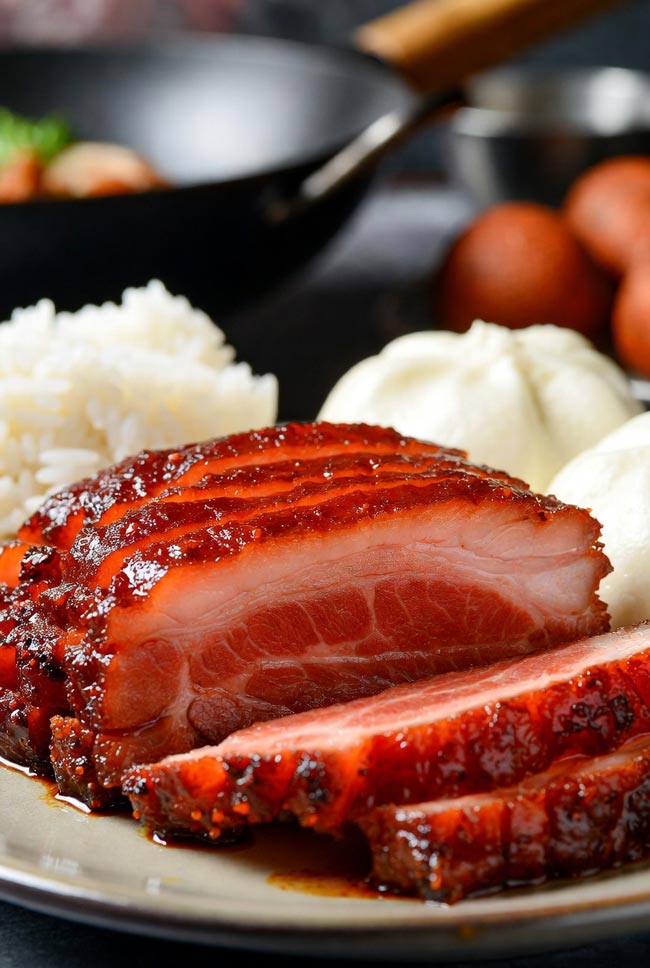
Char Siu, the iconic Cantonese barbecue pork, captivates with its glossy red glaze and tender, sweet-savory bite. Rooted in Guangdong traditions, this dish blends the Maillard reaction’s caramelized magic with Five Spice aromas, making it a must-master for home cooks seeking restaurant-quality results.
This recipe yields restaurant-quality results for home cooks and BBQ enthusiasts, emphasizing the Maillard reaction for a caramelized crust and melt-in-your-mouth tenderness. It is ideal for serving over steamed white rice, where the glaze mingles with the grains for a comforting meal, or stuffed inside fluffy Bao buns for a handheld delight. The balance of hoisin and honey ensures a glaze that clings perfectly, providing subtle caramel notes without overwhelming the pork’s natural flavors.
Prepare for a dish that transports you to the bustling streets of Guangdong, all from your kitchen. This recipe serves four to six people, with a total time of about six hours, including marination, though hands-on effort is minimal.
Ingredients
For the Pork
- Two pounds boneless pork butt (also known as Boston butt or pork shoulder), preferred for its balanced fat content of around 20 to 30 percent. Slice into long strips about two inches wide and one inch thick. Pork belly can substitute for a richer, fattier texture if desired.
For the Marinade
- One quarter cup hoisin sauce (provides the fermented bean base for umami depth)
- One quarter cup oyster sauce (adds briny savoriness to amplify glutamates)
- One quarter cup Shaoxing wine (tenderizes with acidity and alcohol, brightening flavors)
- Three tablespoons of honey (focuses on floral sweetness for the glaze, balancing hoisin’s richness; use raw honey for nuanced notes)
- Two tablespoons light soy sauce (contributes saltiness and color)
- One tablespoon fermented red bean curd, mashed (imparts earthy, cheesy umami akin to miso)
- One teaspoon Five Spice powder (a blend of star anise, cloves, cinnamon, Sichuan peppercorns, and fennel for aromatic warmth)
- One teaspoon red yeast rice powder (natural ferment for iconic red color and mild nutty flavor, avoiding artificial dyes)
- Two cloves of garlic, minced (adds pungent aroma)
- One inch fresh ginger, grated (provides subtle heat and freshness)
- Optional: One eighth teaspoon natural red food coloring if a deeper hue is desired, but red yeast rice suffices for authenticity
For the Basting Glaze
- Reserved marinade (from the recipe below)
- Two additional tablespoons of honey (to enhance stickiness during cooking)
- One tablespoon of water (to thin for even application)
Instructions
Step 1: Prepare the Marinade
In a large mixing bowl, combine the hoisin sauce, oyster sauce, Shaoxing wine, honey, light soy sauce, mashed fermented red bean curd, Five Spice powder, red yeast rice powder, minced garlic, and grated ginger.
Whisk vigorously until the mixture achieves a smooth, thick consistency that is pourable yet clings to a spoon. This balance is crucial: the hoisin provides a savory anchor, while the honey introduces sweetness that will caramelize beautifully through the Maillard reaction.
Taste and adjust if needed-aim for a harmonious blend where no single flavor dominates. The red yeast rice powder will dissolve, imparting a natural crimson tint that symbolizes good fortune in Cantonese culture.
Step 2: Marinate the Pork
Place the pork strips in a large resealable plastic bag or a shallow glass dish. Pour the marinade over the pork, ensuring every piece is fully coated. Use your hands (wearing gloves if preferred) to massage the marinade into the meat, poking small holes with a fork to allow deeper penetration.
This step leverages the acidity from Shaoxing wine and enzymes in honey to break down proteins, resulting in a tender texture. Seal the bag or cover the dish tightly, then refrigerate for at least four hours.
For optimal flavor infusion, marinate overnight or up to 48 hours, flipping the pork occasionally. Reserve about one quarter cup of the marinade in a separate bowl for the basting glaze-cover and refrigerate it as well.
Step 3: Prepare for Cooking
Remove the pork from the refrigerator about 30 minutes before cooking to reach room temperature, promoting even heat distribution. Preheat your chosen cooking device: for oven roasting (recommended for beginners to mimic traditional Cantonese ovens), set to 275 degrees Fahrenheit.
Line a baking sheet with aluminum foil and place a wire rack on top to allow fat to drip away, preventing sogginess. If grilling, set up a two-zone charcoal grill with indirect heat. For air frying, preheat to 375 degrees Fahrenheit.
While preheating, prepare the basting glaze by mixing the reserved marinade with the additional two tablespoons of honey and one tablespoon of water. Warm gently in a small saucepan over low heat until the honey melts, stirring to combine. This glaze will build layers of sticky sweetness during cooking.
Step 4: Cook the Char Siu
Oven Roasting Method (Preferred for Classic Results): Arrange the marinated pork strips on the wire rack. Roast in the preheated oven for 45 minutes, basting every 15 minutes with the honey-enhanced glaze. This repeated basting seals in moisture and promotes the Maillard reaction, creating hundreds of flavor compounds for that deep, savory crust. After 45 minutes, switch the oven to broil at 425 degrees Fahrenheit. Broil for two to three minutes per side, watching closely to achieve a glossy, slightly charred edge without burning. The internal temperature should reach 150 degrees Fahrenheit for juicy, safe pork. Remove and let rest.
Grilling Method (For Smoky Depth): Thread the pork onto metal skewers for easy handling. Place over indirect heat on the grill, covering if possible. Cook for 40 to 50 minutes, turning and basting every 10 minutes. Finish over direct heat for two minutes per side to caramelize the glaze. Internal temperature: 150 degrees Fahrenheit.
Air Frying Method (For Quick Convenience): Place the pork in the air fryer basket without overcrowding. Cook for 20 to 25 minutes, flipping halfway and basting at the midpoint. Extend by five minutes for thicker cuts. This method uses circulating air for rapid Maillard browning.
Rest the cooked pork on a rack or hanging (traditional style) for 30 minutes. This allows juices to redistribute, ensuring each slice remains moist.
Step 5: Slice and Serve
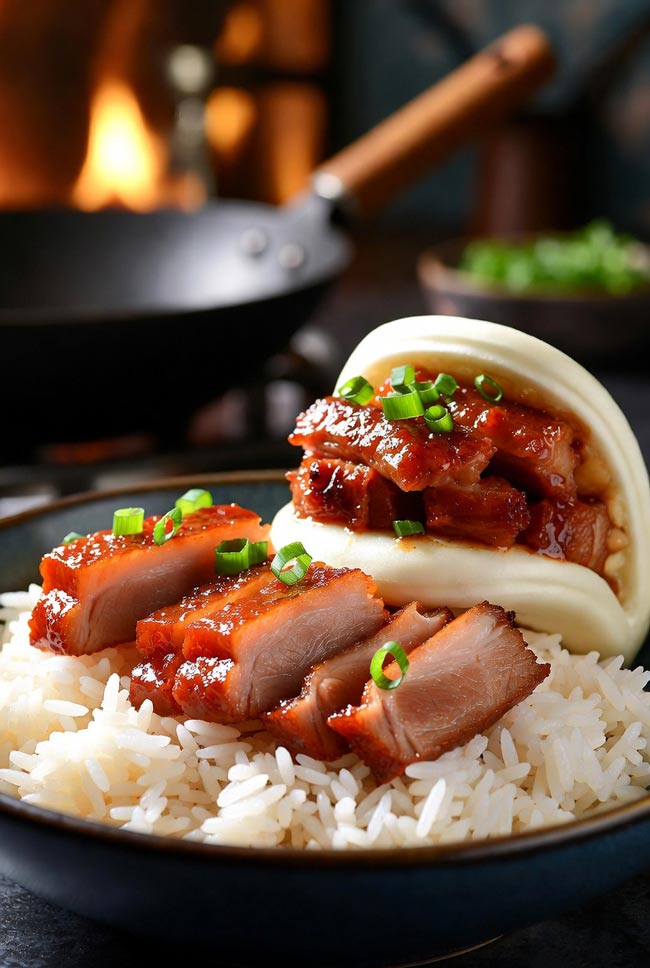
Slice the Char Siu against the grain into thin pieces, about one-quarter inch thick, to maximize tenderness. Serve warm over steamed white rice, drizzling any remaining glaze for added stickiness, or stuff into steamed Bao buns with pickled vegetables for contrast. Garnish with sliced green onions or sesame seeds for visual appeal and texture.
Pro Tips
For ultimate authenticity, source red yeast rice powder from Asian markets; it not only colors but adds a subtle fermented nuttiness.
- Balance check: If the glaze tastes too sweet, add a splash of soy sauce; too savory, a touch more honey.
- Scale up: Double the recipe for crowds, but marinate in batches to ensure even coverage.
- Storage: Refrigerate leftovers in an airtight container for up to three days. Reheat gently in the oven at 300 degrees Fahrenheit to revive the glaze.
Troubleshooting
- Not sticky enough? Increase basting frequency or add more honey to the glaze.
- Too dry? Shorten cooking time or use pork with higher fat content like belly.
- Uneven color? Ensure thorough marination and even heat distribution.
- Burnt edges? Reduce broiling time and baste with thinned glaze to moderate caramelization.
This Classic Cantonese Tradition Char Siu embodies the science of flavor, where hoisin and honey dance in perfect equilibrium, enhanced by red yeast rice for tradition without compromise. Experiment from this baseline to create your signature twists.
Share your results in the comments or on social media: How did yours turn out?


Leave a Reply